 ← Grupo Aprecisa · Connecting those who know with those who need
Sovereignty · Article published on LinkedIn on 19 June 2026
War Is Decided on the Ground, Not in the Cloud
The ten equations of sovereignty, explained to anyone
Gaspar do Amaral · 19 June 2026
Translated from the Portuguese original. This version was issued on 30 October 2026.
On this site, this article has been
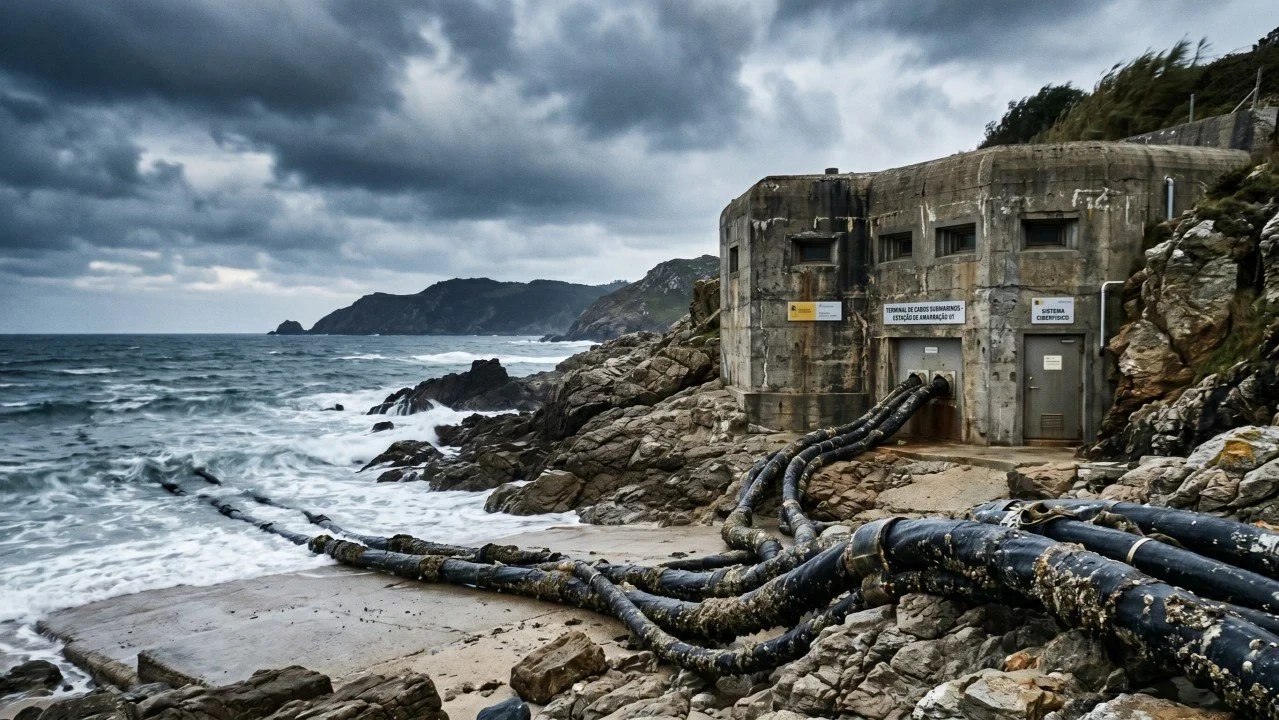
There are a handful of physical points where destroying something cheap brings down something immense — and it is there, not in cyberspace, that today’s wars are decided.
The ten equations of sovereignty, explained to anyone.
I have spent more than 35 years looking after the physical things that make the digital world work: communications, antennas, generators, networks. And I have learnt a simple truth that almost everyone forgets: the internet is not in the cloud. It is at the bottom of the sea and in the wall socket. When someone cuts a cable or the electricity fails, not even the best system in the world survives.
I do not need theories to prove it — three recent facts are enough. On 28 April 2025, Portugal and Spain went dark: trains stopped, hospitals switched to generators, telecommunications ceased — without any cyberattack, simply because of a failure of the electricity grid. In the Baltic Sea, between 2024 and 2025, several submarine cables were cut by anchors, to the point that NATO deployed ships to watch over them. And in the Red Sea, in 2025, four severed cables brought the internet of three continents to its knees. In every case, the blow came from the physical ground, not from cyberspace.
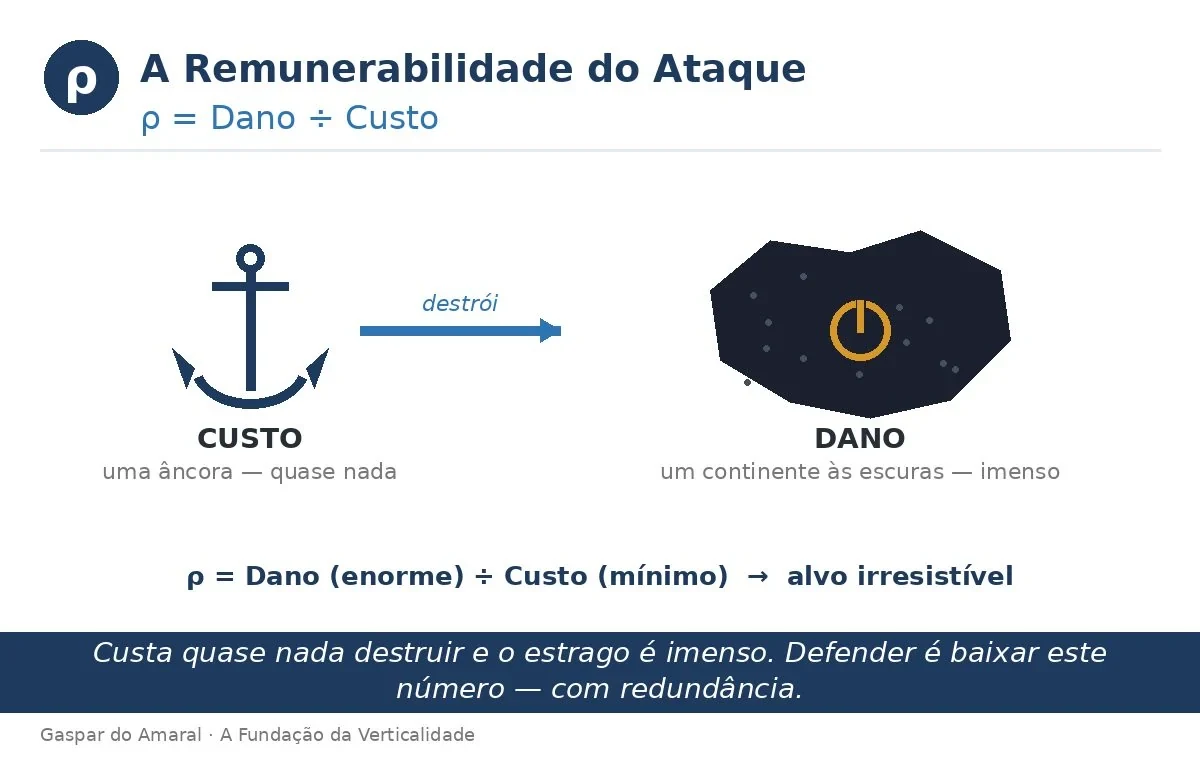
Note the signature common to the three cases: a cheap action — an anchor, a simple failure — against an immense effect. That is the rule that matters. There are a handful of physical points where the cost of destroying is minimal and the damage is maximal: the stations where cables come ashore, the large transformers that take years to replace, the generation that holds the grid frequency. I call this the remunerability of the attack (remunerabilidade do ataque) — the damage divided by the cost. The higher it is, the more irresistible the target. And the defender’s task is simple to state and hard to fulfil: bring that number down at every point, until none is worth attacking.
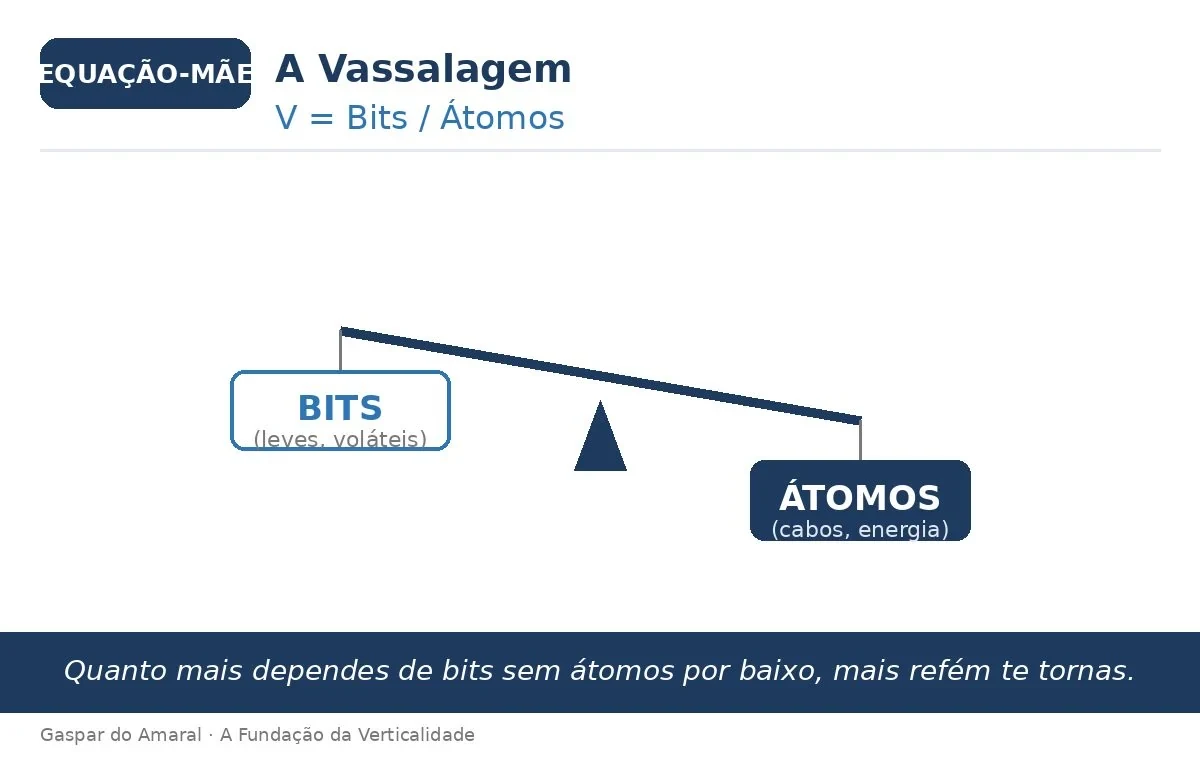
To defend those points — and everything that rests on them — I have summed up my doctrine in ten ideas, each with its own formula. You do not need to know mathematics — just look at the drawings. It all starts with a single sum that I call Vassalage (Vassalagem, V):
V = Bits ÷ Atoms. Our dependence is the ratio between what we entrust to bits (data, in the cloud) and what we keep in atoms (cables, energy, food). The more we lean towards bits, the more we are hostages. (Chart — Vassalage)
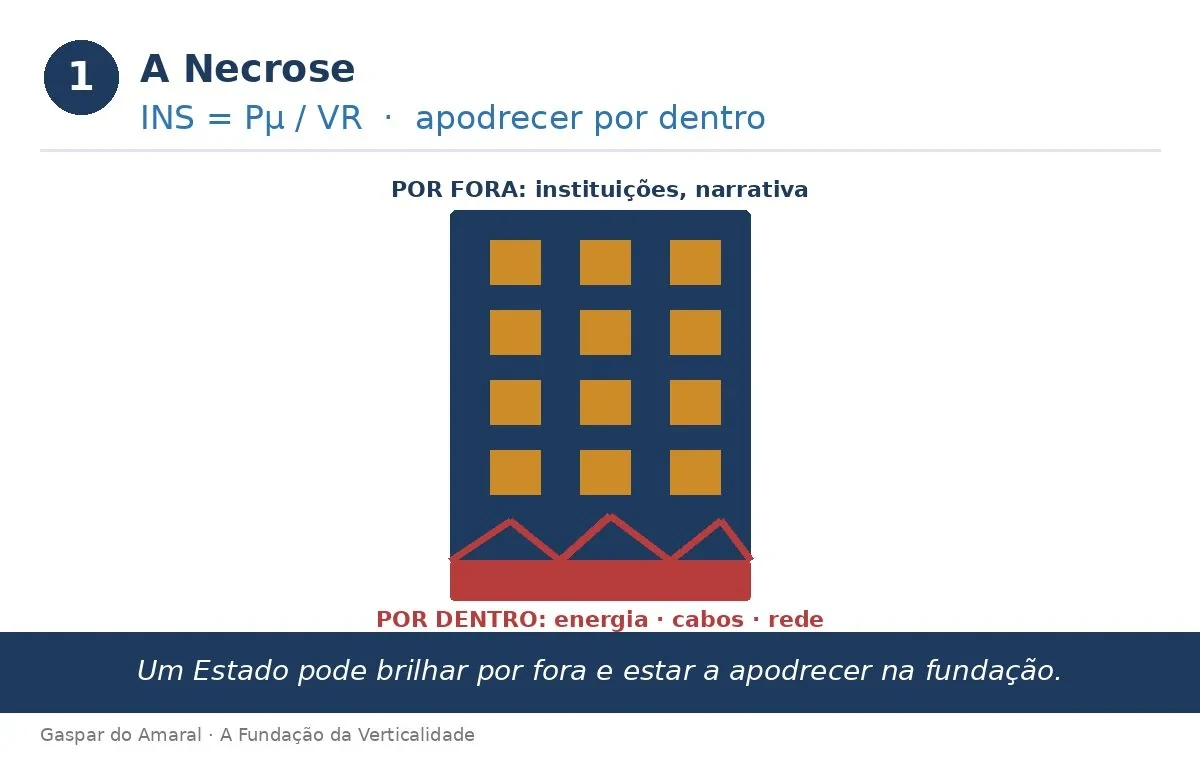
1. Necrosis. A country can look healthy from the outside — institutions, speeches — and be rotting at the foundation. Venezuela had institutions; it collapsed through energy and the economy. (Chart 1)
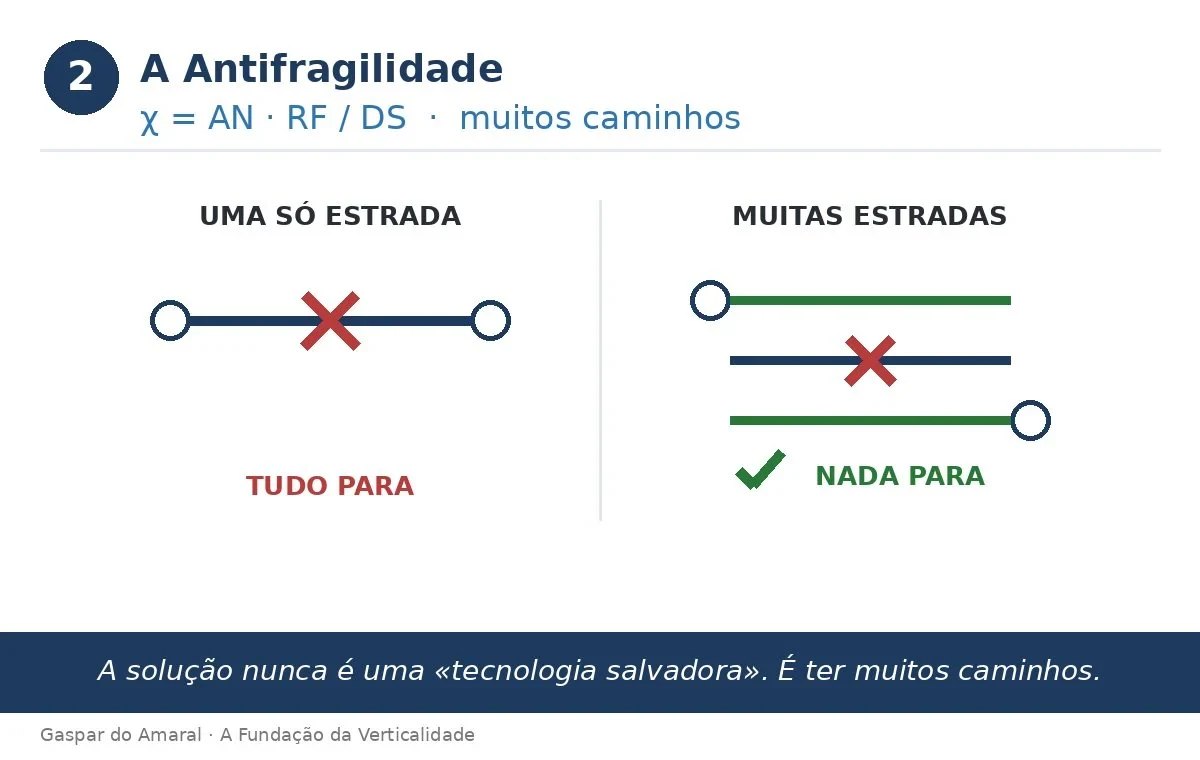
2. Antifragility. If there is only one road, a single cut stops everything. In Tonga, in 2022, a single severed cable left the country offline for weeks. The solution is never a «saviour technology» — it is having many paths, so that one cut never stops everything. (Chart 2)
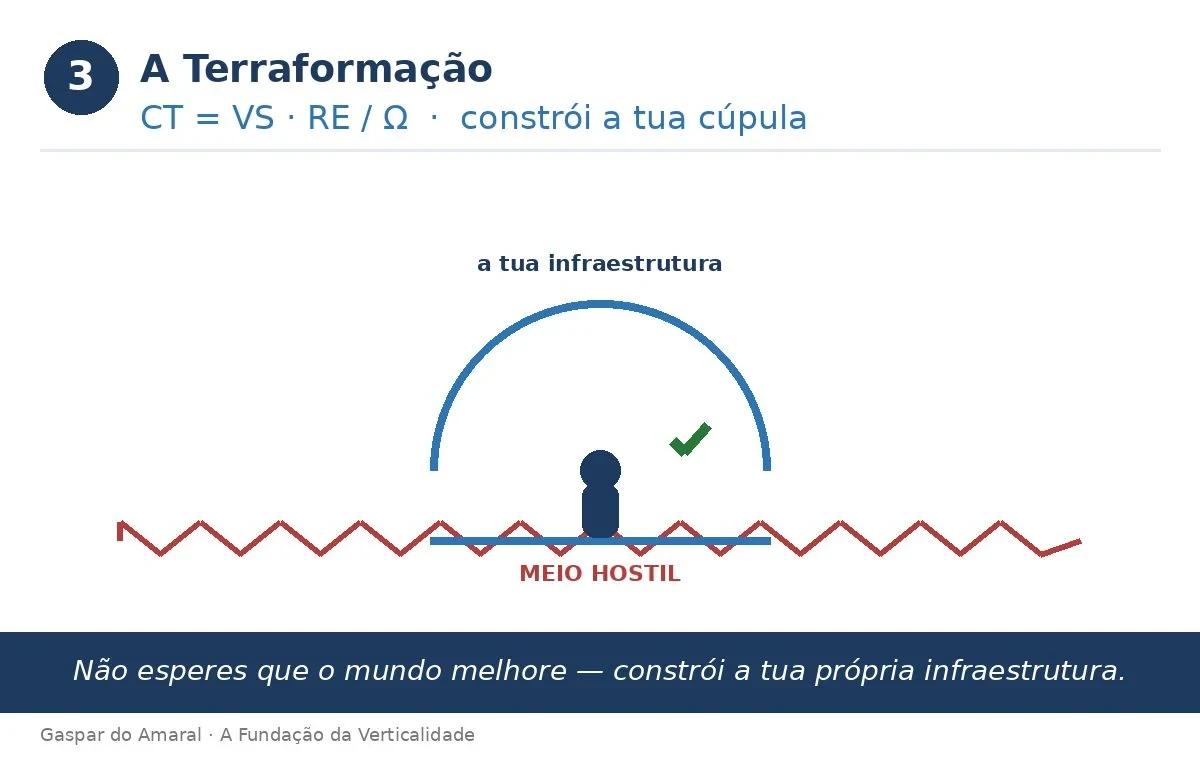
3. Terraforming. There is no point waiting for the environment to improve: you build your own infrastructure — sovereign cables and landing stations, your own energy. It is the path of any country that decides to produce its own submarine cable instead of renting it. (Chart 3)
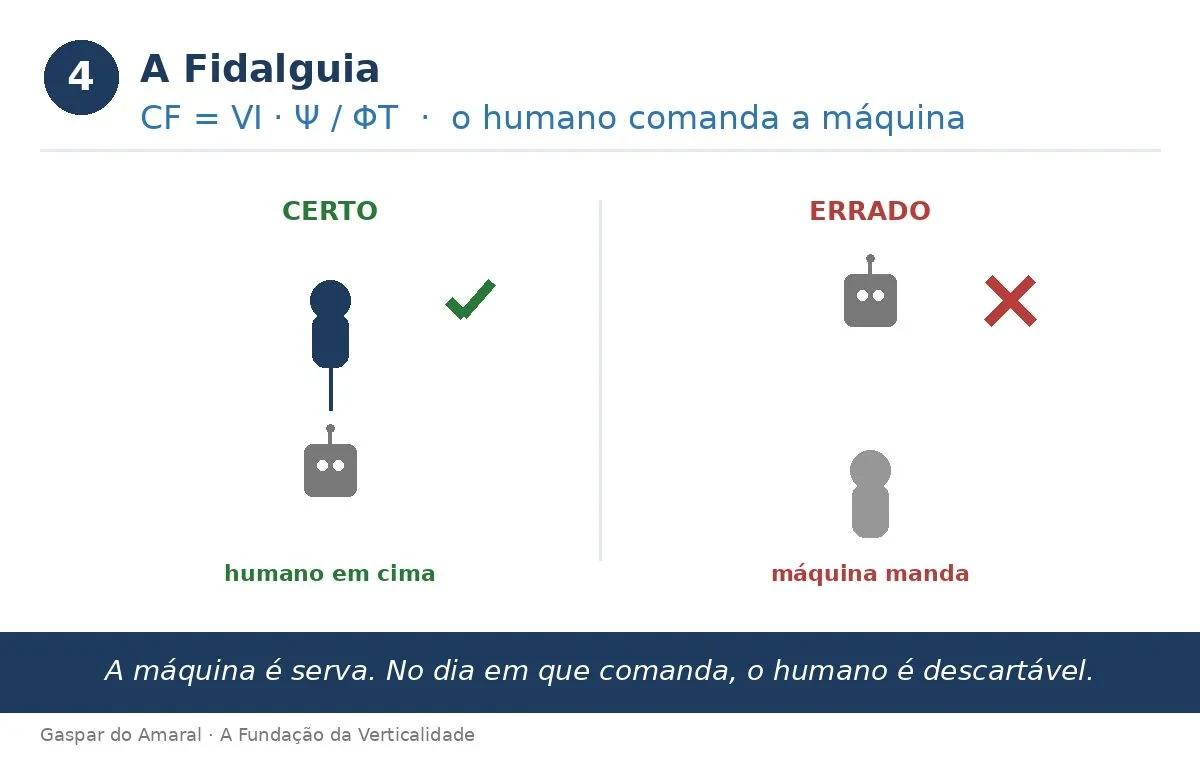
4. Nobility. The machine and artificial intelligence are servants; the human commands. On the day the machine starts giving the orders and the human merely executes, we become disposable. (Chart 4)
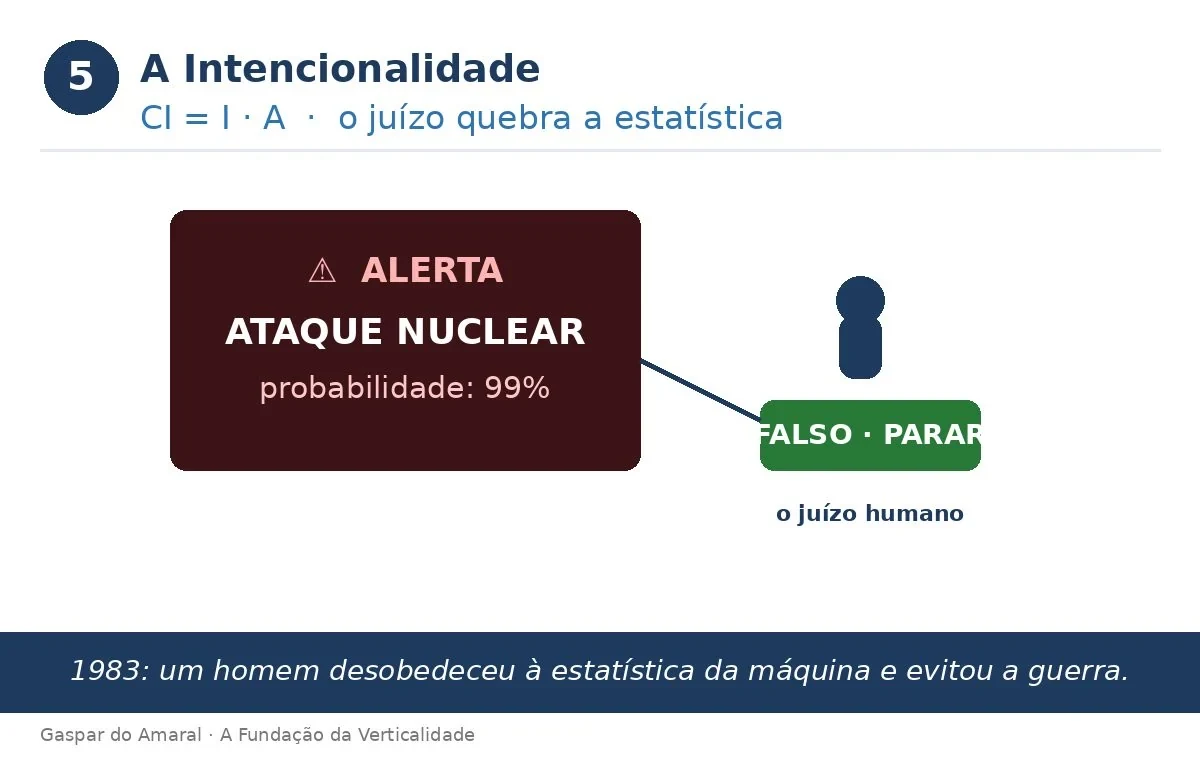
5. Intentionality. In 1983 a Soviet system indicated «nuclear attack, 99% probability». One man, Stanislav Petrov, looked and decided: it is false. He disobeyed the statistics and averted a war. No algorithm replaces that judgement. (Chart 5)
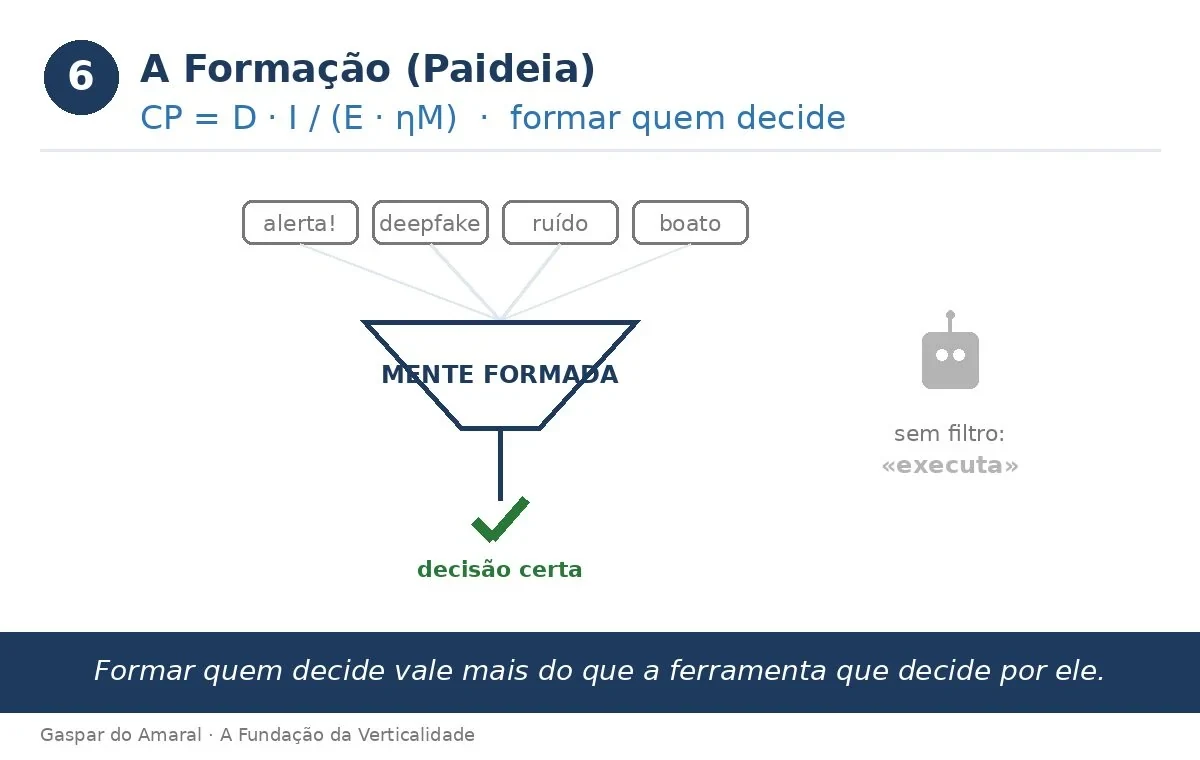
6. Training. It is worth more to train the person who decides well than to buy the tool that decides for them. A prepared person questions an automatic alert or a false order; the «robot of flesh» merely executes. (Chart 6)
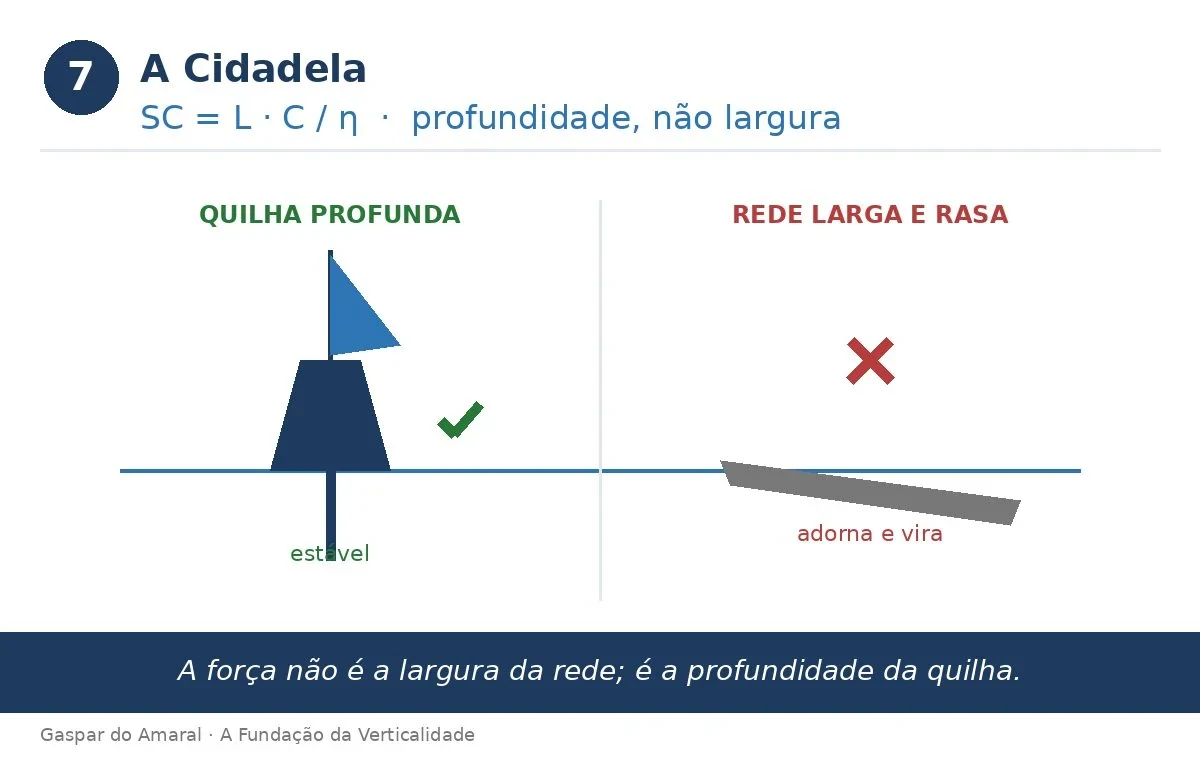
7. The Citadel. The strength of a team lies not in the width of its network of contacts, but in the depth of its keel — loyalty and clear command. In Kyiv, in 2022, the communications of an army depended on civilian mobile-phone masts; out of coverage, command sank. (Chart 7)
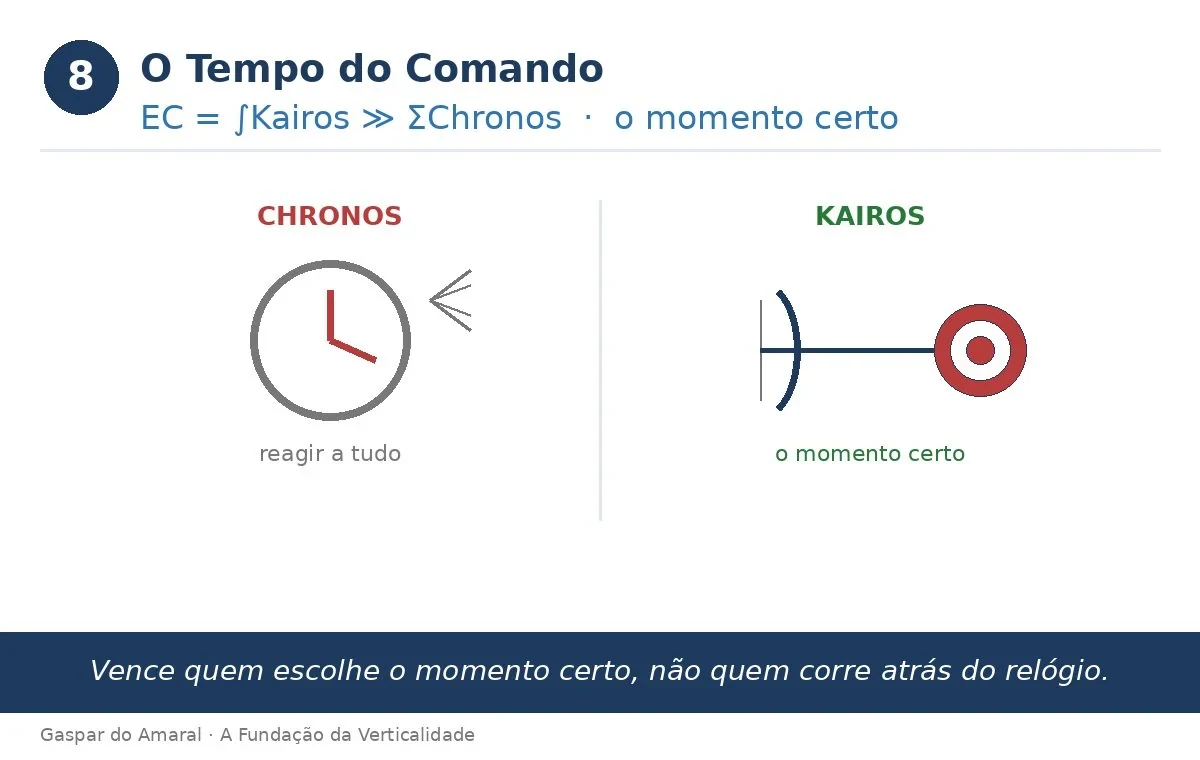
8. The Time of Command. The winner is whoever chooses the right moment, not whoever chases every alert. The good commander waits for the decisive window, as the archer waits for the shot — instead of reacting, exhausted, to everything at once. (Chart 8)
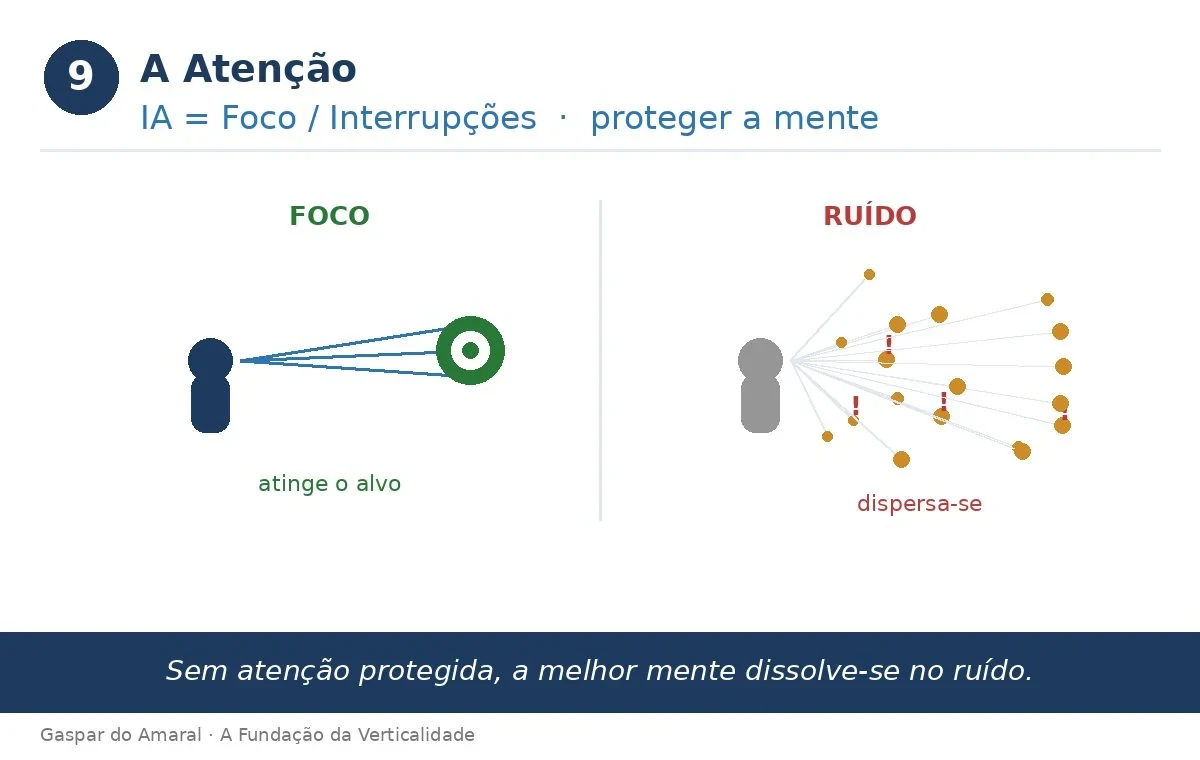
9. Attention. Here I hold my hands up: on this point, the «digital» school is right. Without protecting attention, the best mind dissolves into noise — deepfakes, disinformation, notifications. It is a real battlefield. (Chart 9)
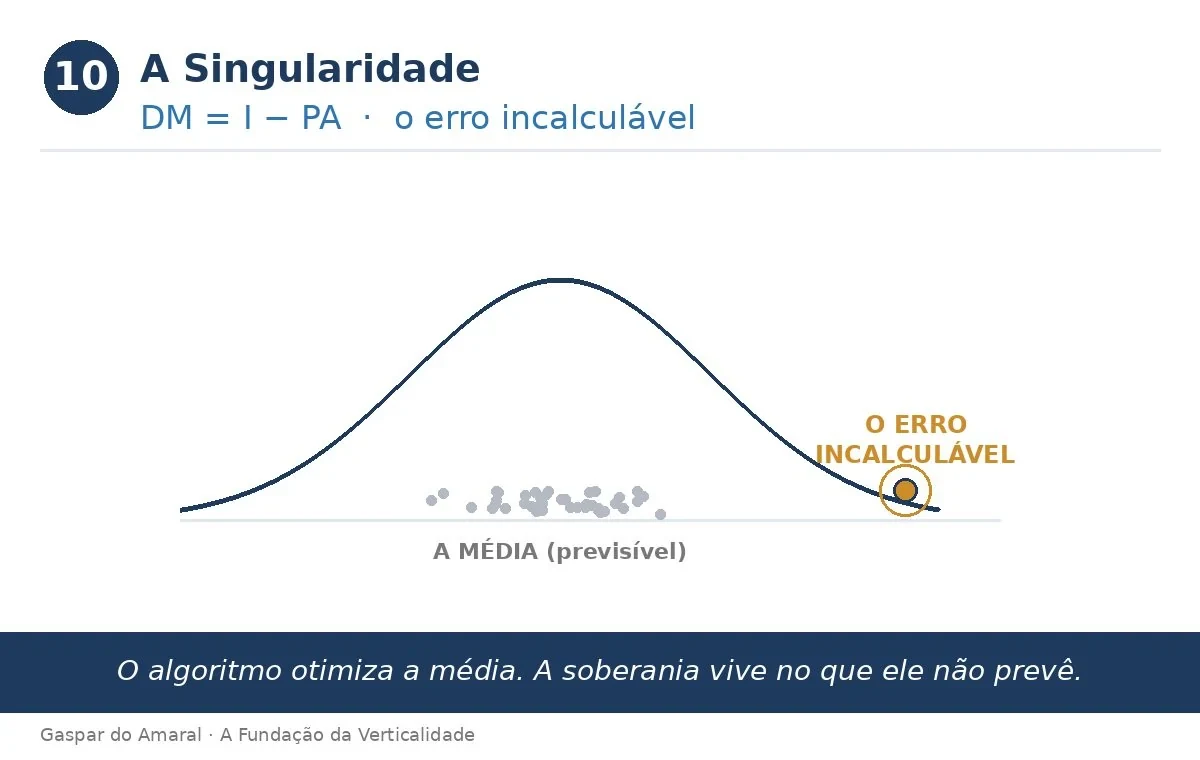
10. Singularity. The algorithm optimises the average and tries to predict everyone. But sovereignty lives precisely in what it cannot predict: the human decision outside the expected, the «incalculable error» (erro incalculável) that saves the day. (Chart 10)
Of the ten ideas, nine point downwards, to the physical ground — and only one, attention, lives entirely in the world of data. The war of our century is not decided where the data are. It is decided at the few physical points where a cheap blow can switch off a continent — communications, generators, the frequency that keeps them alive. Everything else rests on that. Physics always writes the denominator.
Gaspar do Amaral
Quick glossary — the ideas of sovereignty, one line each
- Vassalage (V = Bits ÷ Atoms) — the more we depend on the digital with no physical base, the more we are hostages.
- Remunerability (ρ = Damage ÷ Cost) — the cheaper it is to destroy a point and the greater the damage, the more irresistible the target — and the more urgent to shield it.
- 1 · Necrosis — a country can shine on the outside and be rotting at the foundation.
- 2 · Antifragility — many paths survive; a single path falls at the first cut.
- 3 · Terraforming — do not wait for the world to get better: build your own infrastructure.
- 4 · Nobility — the human commands the machine. Otherwise, the human becomes disposable.
- 5 · Intentionality — human judgement is worth what the statistics cannot predict.
- 6 · Training — training the one who decides is worth more than the tool that decides for them.
- 7 · Citadel — strength is not the width of the network; it is the depth of the keel.
- 8 · Time of Command — the winner is whoever chooses the right moment, not whoever reacts to everything.
- 9 · Attention — without protecting attention, the best mind dissolves into noise.
- 10 · Singularity — sovereignty lives in what the algorithm cannot predict.
Physics always writes the denominator.
Methodological note
What this page is. A translation of the article the author published on LinkedIn on 19 June 2026; the full Portuguese version is on this site. The article has no numerical calculations: the formulas are qualitative summaries of each idea, and the facts (28 April 2025, the Baltic Sea in 2024–2025, the Red Sea in 2025, Tonga in 2022, Kyiv in 2022, Petrov in 1983) are given exactly as in the original.
The author’s terms. The names of the ten ideas are translated; the Portuguese names are given in brackets where the word is the author’s own coinage (Vassalagem, remunerabilidade do ataque, erro incalculável). «Fidalguia», the nobility of whoever commands, is translated as «Nobility».
Changes of form, not of content. The twelve figures keep their Portuguese texts; each caption translates the title, the formula and the labels. The quick glossary, which in the original is an image at the end, is given as translated text; the hashtags were left out.
The discussion is on LinkedIn (in Portuguese)
Comments on this text are made on LinkedIn, where the article was shared in Portuguese. You are welcome to write in English. Agree, disagree or add data: every well-founded objection receives a reply.
Gaspar do Amaral · Original in Portuguese of 19 June 2026, published on this site; translation issued on 30 October 2026 · Figures and tables © Aprecisa.com · AI-assisted
How to cite: Gaspar do Amaral (2026). A guerra decide-se no chão, não na nuvem. Zenodo. https://doi.org/10.5281/zenodo.23814402 · Permanent archive on Zenodo.