 ← Grupo Aprecisa · Connecting those who know with those who need
People and society · Article published on LinkedIn on 5 May 2026
The Abyss of Rigour and Humanist Engineering
Engineering at the service of people: the systemic cost of critical infrastructure and social cohesion
Gaspar do Amaral · 5 May 2026
Translated from the Portuguese original. This version was issued on 30 October 2026.
On this site, this article has been
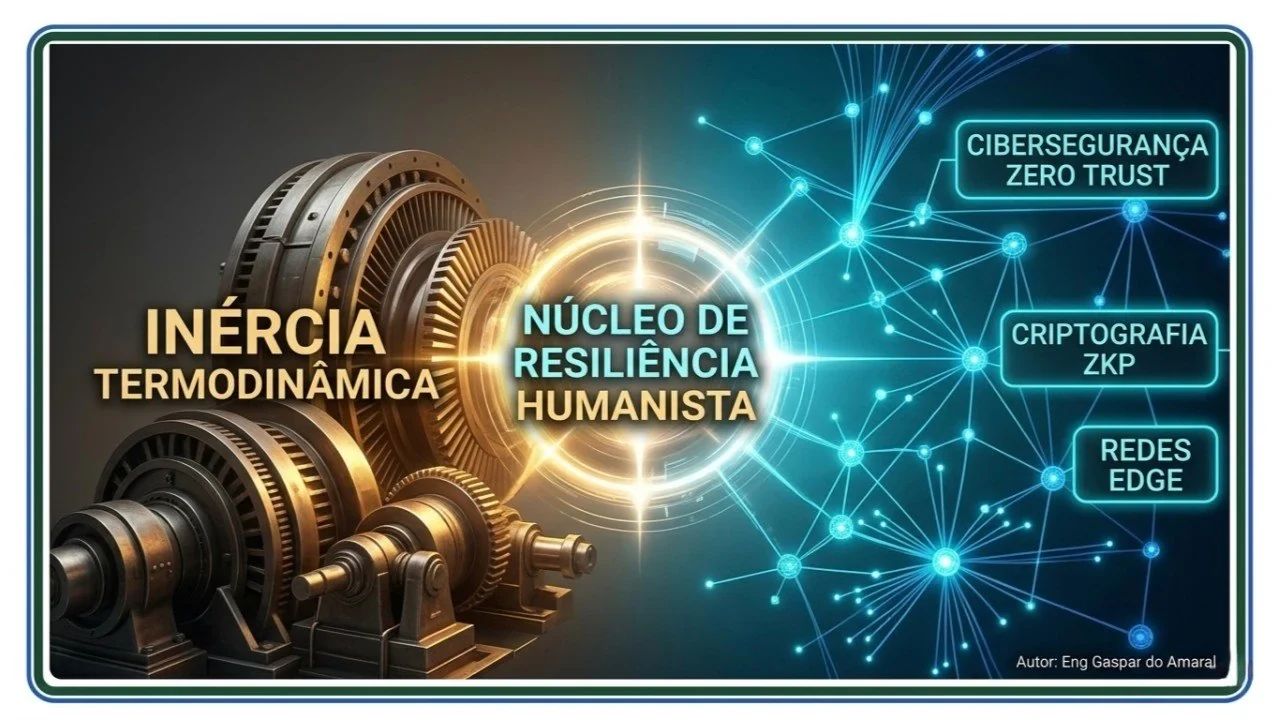
The Imperative of Systemic Cost in Critical Infrastructure
Over years of technical and scientific integration of critical transport and communications systems — operating at the complex intersection of the land, maritime and air domains —, one unavoidable premise asserts itself: the engineering of strategic infrastructure is not a mere discipline of technological optimisation, but the ultimate guarantor of social cohesion and human survival. Humanist Engineering (Engenharia Humanista) dictates that the machine must serve people; but for technology to protect society at the moment of collapse, structural planning must obey, with relentless rigour, the impregnable laws of physics, electromagnetism and cryptography.
We are currently going through an energy transition built on a fallacy that threatens this very human security. The public and regulatory debate remains crystallised around the transactional metric of energy volume — the megawatt-hour (MWh) — and around the levelised cost focused only on the generating plant (the Plant LCOE). As top researchers such as Paul Joskow of MIT have shown [Ref. 1: doi.org/10.1257/aer.101.3.238], the massive proliferation of intermittent sources imposes integration costs that the traditional metric ignores. By coupling this generation to the grid exclusively through power electronics, we are stripping electricity systems of their physical property most vital to the protection of life: synchronous inertia.
The False Electromechanical Equivalence and the Ethics of Resilience
Hyper-decentralised systems do not provide genuine inertia. The seminal work of Goran Strbac (Imperial College London) on whole-system costs [Ref. 3: imperial.ac.uk/energy-futures-lab/reports] proves that, by replacing centralised generation with static converters, we degrade the electromechanical resilience of the system. The grid’s ability to withstand a fault falls drastically, putting life-support infrastructure at risk.
It is at this point that the concept of System LCOE (given mathematical form by Falko Ueckerdt [Ref. 2: doi.org/10.1016/j.energy.2013.09.005]) becomes an ethical imperative. The real cost of energy includes the back-up infrastructure and the spinning reserve needed to keep the sine wave intact. Ignoring this is structural negligence.
Engineering Vanguards: the United Kingdom, Australia and Denmark
The answer to this abyss of rigour is not theoretical; it is already being imposed on grids that have operated at the edge of rupture:
- United Kingdom (inertia as a commodity): the British operator, through the Stability Pathfinders programme [Ref. 4: nationalgrideso.com/future-energy/projects/pathfinders], has created a market dedicated to synchronous inertia. It now pays for the installation of synchronous condensers strictly to provide the rotating mass the grid lacks.
- South Australia (AEMO): frequently reaching 100% renewable penetration, the operator has mandated the construction of huge synchronous condensers [Ref. 5: aemo.com.au/…/renewable-integration-study-ris], refusing to entrust the safety of its population to commercial optimism.
- Denmark (Energinet): through the Parker Project [Ref. 6: parker-project.com], commercial Vehicle-to-Grid (V2G) has been put into operation, with electric vehicles monitoring frequency to support the grid within milliseconds.
The Energy–Communications Nexus and the Duty of Survival
For those who design technical frameworks for deep-water ports, airports or submarine cables, electrical reliability goes far beyond the administrative bill.
Integrating these infrastructures requires vector redundancy and the capacity for autonomous islanding. Maintaining dispatchable baseload sources — where pumped-storage hydro or nuclear energy stand strictly as technical requirements of physical stability — is non-negotiable. The infrastructure must have edge autonomy (see Figure 2 and Ref. 8), ensuring that, in a disaster scenario, hospitals, vital logistics and emergency communications do not perish in the dark.
Cybersecurity by Design and Two-Speed Responsibility
By trying to make up for the lack of physical inertia with ultra-low digital latency, we turn the electricity grid into a distributed target. Humanist Engineering here demands the immediate transition to Two-Speed Responsibility (Responsabilidade a Duas Velocidades), anchored in cyber-physical governance rather than mere administrative control:
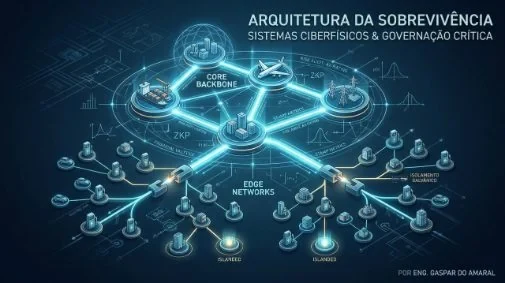
- Auditing through ZKP (cryptography as a sovereign shield): the State cannot demand the handover of source code, which would create cyber honeypots. Licensing should be done through zero-knowledge proofs (ZKP): mathematical constructions that attest to the system’s resistance to attack vectors without revealing algorithms.
- Edge network (the ethics of graceful degradation): at the urban periphery, pure electromechanical disconnection (galvanic isolation) is adopted. Under attack, the infrastructure assumes “graceful degradation”: it operates asynchronously on local batteries, sacrificing the node’s connectivity to ensure that the vital functions of basic human life carry on autonomously.
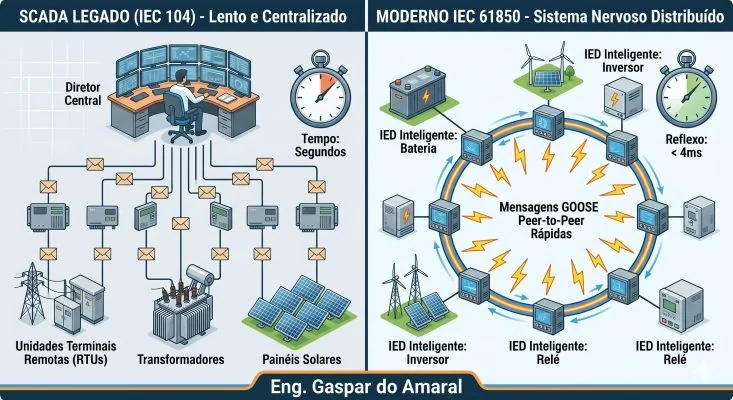
By trying to make up for the lack of inertia with digital latency, we turn the grid into a target. Humanist Engineering here demands the transition to Two-Speed Responsibility [Ref. 8: The Governance of Critical Infrastructure and Two-Speed Responsibility].
Gaspar do Amaral’s Contributions to the Iberian Legislative Reform
For MIBEL (the Iberian Electricity Market) to serve the Nation with the rigour that human life demands, the following breaks with the past are needed in the Basic Law:
- Electromechanical Stability Market: exclusive remuneration for synchronous inertia.
- Independent Aggregator: unrestricted access of virtual fleets to the balancing markets.
- End of tariff “postage stamping”: adoption of dynamic nodal prices based on the real saturation of the grid.
- ZKP auditing and NIS 2 compliance: validation through zero-knowledge proofs as a mandatory legal standard, in strict compliance with the European security directives [Ref. 7: eur-lex.europa.eu/eli/dir/2022/2555/oj].
- Internalisation of the System LCOE: an obligation to assess projects by the total cost of back-up integration, penalising solutions that degrade civil protection.
- Technical Mandate of National Defence: the sovereign requirement to maintain synchronous baseload sources at the system’s nerve-centre nodes.
The energy transition will only fulfil its humanist purpose if it is built on relentless scientific rigour. If we do not have the courage to look the abyss of rigour (Abismo do Rigor) in the face, we risk building societies that are digitally very advanced but structurally incapable of protecting their citizens — thus failing the founding oath of our profession.
List of Fundamental References and Practical Use
- Joskow, P. L. (2011). Comparing the Costs of Intermittent and Dispatchable Electricity Generating Technologies. Link: doi.org/10.1257/aer.101.3.238. Use: demolishes the volumetric fallacy, showing the fatal error of ignoring the cost of structural integration and the incalculable value of reliability to society.
- Ueckerdt, F., et al. (2013). System LCOE: What are the costs of variable renewables? Link: doi.org/10.1016/j.energy.2013.09.005. Use: defines the System LCOE; proves that the massive penetration of inverters requires pricing the balancing risk to avoid logistical collapse.
- Strbac, G., et al. (2015). Value of Flexibility in a Decarbonized Grid. Imperial College London. Link: imperial.ac.uk/energy-futures-lab/reports. Use: provides the rigorous algorithmic framework to assess the degradation of synchronous inertia, the physical line of defence of the population.
- National Grid ESO. Stability Pathfinders. United Kingdom. Link: nationalgrideso.com/future-energy/projects/pathfinders. Use: technical proof of the need for an autonomous market for the mandatory installation of synchronous condensers.
- AEMO. Renewable Integration Study (RIS). South Australia. Link: aemo.com.au/…/renewable-integration-study-ris. Use: a vital case study documenting the technical mandate for the forced injection of inertia into systems on the verge of collapse.
- Parker Project (DTU / Energinet). Grid Integration of Electric Vehicles. Link: parker-project.com. Use: applied engineering validation of the proposals for microgrids and Vehicle-to-Grid (V2G) for local support in crises.
- European Parliament and Council. Directive (EU) 2022/2555 (NIS 2). Link: eur-lex.europa.eu/eli/dir/2022/2555/oj. Use: the legal engine that validates “Two-Speed Responsibility” in the cyber protection of life-support infrastructure.
- Amaral, G. (2026). The Governance of Critical Infrastructure and Two-Speed Responsibility. LinkedIn. Link: English version on this site. Use: the founding document of the doctrine that proposes the paradigm of sovereign auditing through ZKP and establishes the ethics of galvanic isolation at the edge to ensure human survival in “island mode”.
Methodological note
What this page is. An English translation of the article the author published on LinkedIn on 5 May 2026; the full Portuguese version is on this site. The article contains no calculations of its own.
Changes of form, not substance. The original has three illustrations, numbered 1 (the cover) to 3; the author’s captions for Figures 2 and 3 are joined here to the description of each image. Some import artefacts in the original have been removed (a word run together at the start, “[cite: 2]” marks and a broken link to Ref. 8, which now points to the English version of that article on this site). The links to sources are those of the original.
The discussion is on LinkedIn (in Portuguese)
Comments on this text are made on LinkedIn, where the article was shared in Portuguese. You are welcome to write in English. Agree, disagree or add data: every well-founded objection receives a reply.
Gaspar do Amaral · Original in Portuguese of 5 May 2026, published on this site; translation issued on 30 October 2026 · Figures and tables © Aprecisa.com · AI-assisted
How to cite: Gaspar do Amaral (2026). O Abismo do Rigor e a Engenharia Humanista. Zenodo. https://doi.org/10.5281/zenodo.23814382 · Permanent archive on Zenodo.